

Joining the workforce right after college is a huge transition. Sharing that some habits that help build a professional environment.
When trainees enter the workplace, they are surrounded by data, information, training materials, dashboards, tutorials, meetings, and endless online content. It can sometimes feel like learning more means simply collecting more information.
But in the workplace, growth happens when people understand the difference between data, information, knowledge, and skills.
They are connected but they are not the same.
Data is simply raw facts.
Numbers on a spreadsheet. Attendance records. Sales figures. Customer names. Deadlines. Test scores.
By itself, data does not explain much.
When data is organized and given meaning, it becomes information.
For example, “Sales increased by 15% this quarter” is information because the numbers now tell a story. A project tracker showing delayed tasks is information because it helps people understand a situation.
Today, information is easy to access. A trainee can search online, watch videos, attend workshops, or use AI tools to gather information within minutes.
But information alone does not create workplace growth.
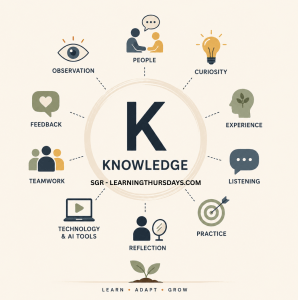
Knowledge develops when people begin understanding how to use information in real situations.
A trainee may know the steps to create a report because they learned the process online. But understanding what details matter most to leadership, how errors affect decisions, or why one client needs a different approach than another, that understanding comes through experience, observation, and thinking beyond the task itself.
That is Knowledge.
Knowledge grows differently across organizations, teams, and projects. Every workplace has its own pace, expectations, communication styles, and challenges. Something that works perfectly in one team may not work the same way in another.
Over time, trainees begin learning not just the task, but the context around the task.
Then comes skill.
Skills are the ability to apply knowledge consistently through practice.
Communication becomes a skill when someone learns how to speak clearly during difficult conversations. Problem-solving becomes a skill when someone handles challenges calmly under pressure. Technical work becomes a skill when repetition builds speed, accuracy, and confidence.
Skills improve through doing.
A simple way to understand it is:
- Data is the raw input.
- Information explains the input.
- Knowledge understands the meaning and context.
- Skills apply that understanding effectively.
A new trainee may start by collecting information quickly. But strong professionals grow by slowly turning information into knowledge, and knowledge into skill.

One senior employee once told a trainee:
Anyone can memorize instructions. Growth begins when you understand why the work matters.
That is why curiosity is so important in the workplace.
The best trainees are usually not the ones pretending to know everything. They are the ones willing to ask questions, observe carefully, practice consistently, and keep learning from every project and every person around them.
Because information may help someone complete a task, but knowledge and skill help them build a career.