
Joining the workforce right after college is a huge transition. Sharing that some habits that help build a professional environment.
Let us focus on Adaptability first!
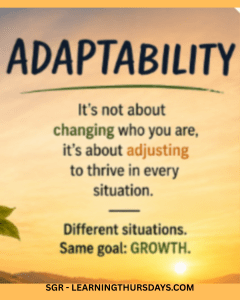
Adaptability is one of the most valued corporate behaviors because workplaces constantly change. Priorities shift, roles change, technology evolves, teams restructure, and unexpected problems arise. An adaptable employee adjusts effectively without losing productivity, professionalism, or focus.
What Adaptability means at work, especially to trainees & newbies?
- Handle changing deadlines or priorities calmly – Projects & teams are already in place, and they may be working towards a common goal / deadline. Try to understand the project, overall goal and timelines involved and see where you can contribute. If you lack a specific skill to contribute towards the progress, spend time on upskilling yourself to help be productive. Be open to changing timelines – although it may not be your fault, as projects have dependencies and many resources (internal & external) need to put in their time & effort to meet specific deadlines. So, make an effort to understand the changing deadlines & priorities. Attending team meetings regularly & reading and understanding the emails shared help a great deal!
- Accept feedback and improve behavior or performance – The work you do usually fits into the bigger picture. Means, you may be fixing nuts and bolts, whereas someone else on the team has the view of the bigger picture – the car that is being built. So, when someone gives you a feedback about your work, as it aligns to the bigger picture, accept feedback and be willing to improve.
- Work with different people – Every supervisor (or manager) you work with brings their own personality & management style. Some are personable, some take their time to teach & coach you, some expect you to step up & take on harder activities on projects, some expect you to perform with perfection, some may share harsh feedback, some inspire you to be your best! Remember that every person you work with, you learn to adapt yourself to be able to having a working relationship with them. With some you learn, with few you unlearn, with some you step up, with others you learn to be a team player. Learning to figure out how to work well as a team player, for the success of the project & your own team is a great way to learn to adapt yourself to grow. Working with varied personalities gives you that opportunity to learn.
- Learn to solve your own problems when plans do not go as expected – While there may be an eco system available in the organization who you can reach out to when you need, remember that you are not at home or at college anymore. You need to develop the ability to identify & solve your own problems when plans do not go as expected. This gives you the self-confidence to pursue your goals, upskill yourself and face your obstacles head on, and reflects a growth mindset.
- Learn to deal with uncertainty – Learn to stay positive during uncertainty & lack of clarity and focus on what you can control. Reach out to your manager (or immediate supervisor) to seek inputs and gain clarity.
Your go-to person for any questions is usually your boss / supervisor / manager. Be in touch with them regularly to understand your work, attend meetings & take notes regularly. Share your status reports and progress updates with your immediate supervisor regularly and seek feedback on your progress.
Why is Adaptability an important trait?
Every organization looks for this trait in employees because adaptable people
- Need less hand-holding during change
- Recover faster from setbacks
- Can move across projects or roles when needed
- Help teams remain stable under pressure
- Embrace innovation instead of resisting it
| Strong Adaptability examples | Weak Adaptability examples |
| – Learning new technologies – Covering another teammate’s tasks during their absence – Adjusting communication style for clients vs colleagues & management – Taking on a new project outside your comfort zone | – Complaining about every change – Resistance to receiving feedback – Refusing to learn new systems – Saying “that’s not my job” repeatedly – Getting stuck when plans shift – Needing constant direction after changes |
How can someone develop their adaptability trait?
| Trainees or Team members | Managers or Leaders |
| – Try to learn new tools regularly – Volunteer for cross-functional projects\ – Participate in company wide activities – Share progress updates frequently – Seek feedback periodically – Practice staying calm under change – Focus on learning, not perfection – Learn to embrace change | – Assign work in a way that helps people grow – Regroup teams effectively – Learn to lead through uncertainty – Communicate change clearly – Supporting morale during transitions – Understand employee expectations – Listen to employee grievances and make changes as necessary to sustain morale of team members |
Adaptability is the ability to remain effective, positive, and solution-oriented when circumstances change.
Tomorrow, we will focus on B – Brand stewardship!