

Joining the workforce right after college is a huge transition. Sharing that some habits that help build a professional environment.
When someone joins a new workplace, they often focus on learning systems, impressing managers, or fitting into the culture. But what quietly shapes their growth isn’t a single big moment, it’s the small habits they repeat every day. Habits are invisible at first, but over time, they become your reputation.
A new trainee once made it a point to spend the first five minutes of every day reviewing their tasks and priorities. It didn’t feel like much, but within weeks, they were the one who never missed deadlines. Others noticed their consistency before they noticed it themselves. That’s the thing about habits, they speak for you long before you do.
Another newcomer had a simple rule: never leave a question unasked. In meetings, they would politely clarify doubts instead of guessing. At first, it felt uncomfortable. But over time, their work had fewer errors, and their confidence grew. What started as a small habit became a strength others relied on.
There was also a trainee who built the habit of documenting everything. Be it notes from meetings, feedback from managers, even small learnings from mistakes. Months later, while others struggled to recall details, this person had a personal playbook to refer to. Their growth looked “fast,” but it was really just organized consistency.

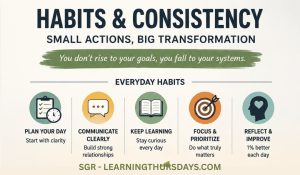
Healthy work habits aren’t about perfection or working endlessly. They’re about choosing small, repeatable actions that reduce stress, build clarity, and create trust. Showing up on time. Following through. Listening fully. Taking ownership. Asking for feedback. These don’t require talent, they require intention.
The challenge for most beginners isn’t ability—it’s overwhelm. There’s so much to learn that it’s easy to jump between tasks without building a rhythm. That’s where habits help. They simplify decisions. Instead of asking “What should I do today?”, your habits answer it for you.
If you’re starting out, don’t try to build ten habits at once. Pick two or three that truly matter—maybe planning your day, communicating clearly, and reviewing your work before submitting. Stay with them long enough for them to feel natural. Growth doesn’t come from intensity; it comes from consistency.
Over time, your habits become your identity. People don’t say, “They worked hard once.” They say, “They are reliable,” “They are thoughtful,” “They always deliver.” And those words are built quietly, one habit at a time.