
Technology has become a part of everyday life. Many of us use our mobile phones, computers, and the internet to stay in touch with family, pay bills, shop online, book appointments, and manage our bank accounts.
While these services make life easier, they have also become popular targets for scammers looking to steal money and personal information.
The good news is that most scams can be avoided by knowing what to look for and taking a few simple precautions.
Imagine this situation. Mary, a retired teacher, receives a phone call from someone claiming to be from her bank. The caller says that suspicious activity has been detected on her account and asks her to confirm her identity by sharing the one-time password (OTP) that has just been sent to her phone. The caller sounds polite, professional, and convincing. Wanting to protect her account, Mary shares the code. Within minutes, money has been transferred out of her account.
Unfortunately, scams like this happen every day.
A common trick used by scammers is to make you feel worried or rushed. They may pretend to be from your bank, the police, a government agency, your internet provider, or even a courier company. They often claim that your account has been compromised, your computer has a virus, or that you owe money and must act immediately. Their goal is to stop you from thinking clearly.
Remember this simple rule: if someone pressures you to act immediately, slow down. Take your time. A genuine organisation will never object if you say you want to call back using its official phone number.
Another scam that has become increasingly common involves family emergencies. You might receive a phone call or message claiming that your child or grandchild has been in an accident, lost their phone, or urgently needs money. These stories are designed to create panic. Before sending any money, contact your family directly using a phone number you already have. A few minutes of checking could save you thousands of dollars.
Scammers also use text messages and emails that look genuine. You may receive a message saying that you have an unpaid toll, a missed parcel delivery, or an unexpected tax refund waiting for you. The message usually contains a link asking you to enter your personal or banking details. If you were not expecting such a message, do not click on the link. Instead, visit the organisation’s official website or call them directly.
Online shopping has made it easier to find almost anything, but it also attracts fake sellers. Be cautious of advertisements offering luxury products at unbelievably low prices. Before making a purchase, check that the website is secure, read customer reviews, and use a credit card or another trusted payment method whenever possible.
One of the best ways to protect yourself is to keep your devices up to date. When your phone, tablet, or computer asks you to install updates, do not ignore them. These updates often contain important security improvements that help protect your personal information.
It is also important to create strong passwords and avoid using the same password for every account. If remembering many passwords is difficult, consider using a notebook stored in a safe place at home or a trusted password manager. Never share your passwords, PINs, or one-time passwords (OTPs) with anyone over the phone, even if they claim to be calling from your bank.
If you receive an unexpected request to install software on your phone or computer, be very cautious. Scammers sometimes convince people to install remote-access programs that allow them to take control of the device. If you did not request technical support yourself, simply decline and end the call.
Perhaps the most important advice is not to feel embarrassed if something seems confusing. Scammers are skilled at sounding trustworthy and convincing. If you are unsure about a phone call, message, or email, talk to a family member, a trusted friend, or your bank before taking any action. Asking for a second opinion is always a wise decision.
Technology offers many wonderful ways to stay connected with family and friends, manage your finances, and enjoy everyday life. By remaining alert, taking your time, and following a few simple safety habits, you can use these services with greater confidence and reduce the risk of becoming a victim of fraud.
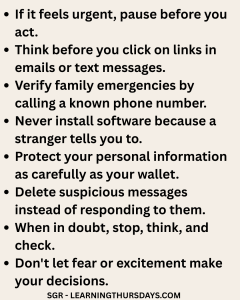
Remember: when in doubt, stop, think, and check. It is always better to be cautious than to act in haste. Your peace of mind and your savings are worth protecting.