

Bleeding gums can signal health issues, and regular brushing & flossing helps significantly for oral care.
Gingivitis occurs when plaque (a sticky film of bacteria) accumulates along the gumline. If it is not removed through regular brushing and flossing, the bacteria trigger inflammation, causing the gums to become irritated.
Some of the most common signs include:
- Red, swollen, or puffy gums
- Bleeding while brushing or flossing
- Persistent bad breath despite brushing
- Tender or sensitive gums
- Receding gums that make teeth appear longer
- A metallic or unpleasant taste in the mouth
Unlike advanced gum disease, gingivitis usually doesn’t cause severe pain, which is why many people ignore its early warning signs. Routine dental check-ups are critical for detecting changes before they become serious.
Untreated gingivitis can progress into periodontitis, a more severe form of gum disease that damages the tissues and bone supporting the teeth. This may eventually lead to loose teeth, tooth loss, and has also been associated with broader health concerns such as heart disease and diabetes.
Taking action early not only protects your smile but also contributes to your overall well-being.

While professional dental care is essential if symptoms persist, several simple home remedies can help prevent gingivitis and maintain healthy gums.
- Brush your teeth twice daily using a soft-bristled toothbrush and fluoride toothpaste.
- Replace your toothbrush every three to four months or sooner if the bristles become worn.
- Floss at least once a day to remove plaque and food particles from between the teeth, where yout toothbrush cannot reach.
- Rinse with warm salt water
- Mix half a teaspoon of salt in a glass of warm water. This may help soothe inflamed gums and reduce bacterial buildup temporarily.
- Stay hydrated throughout the day.
- Drinking water helps wash away food debris and encourages saliva production, which naturally protects against harmful bacteria.
- Eat a balanced diet
- Consume foods rich in vitamin C
- Include leafy greens, crunchy fruits and vegetables
- Maintain good source of calcium-rich foods to support gum health and strengthen teeth
- Limiting sugary snacks and beverages also reduces plaque formation
- Avoid smoking and tobacco products, as they significantly increase the risk of gum disease and slow healing.
- Implement consistent habits
- Brush gently for two minutes twice a day, floss daily, clean your tongue
- Visit your dentist every six months for professional cleanings and examinations
- If you wear braces, dentures, or retainers, pay extra attention to cleaning around them, as plaque can accumulate more easily.
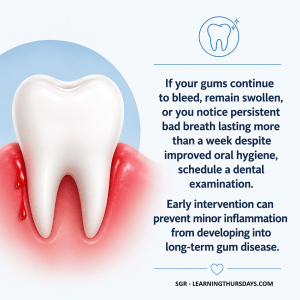
If your gums continue to bleed, remain swollen, or you notice persistent bad breath lasting more than a week despite improved oral hygiene, schedule a dental examination. Early intervention can prevent minor inflammation from developing into long-term gum disease.