
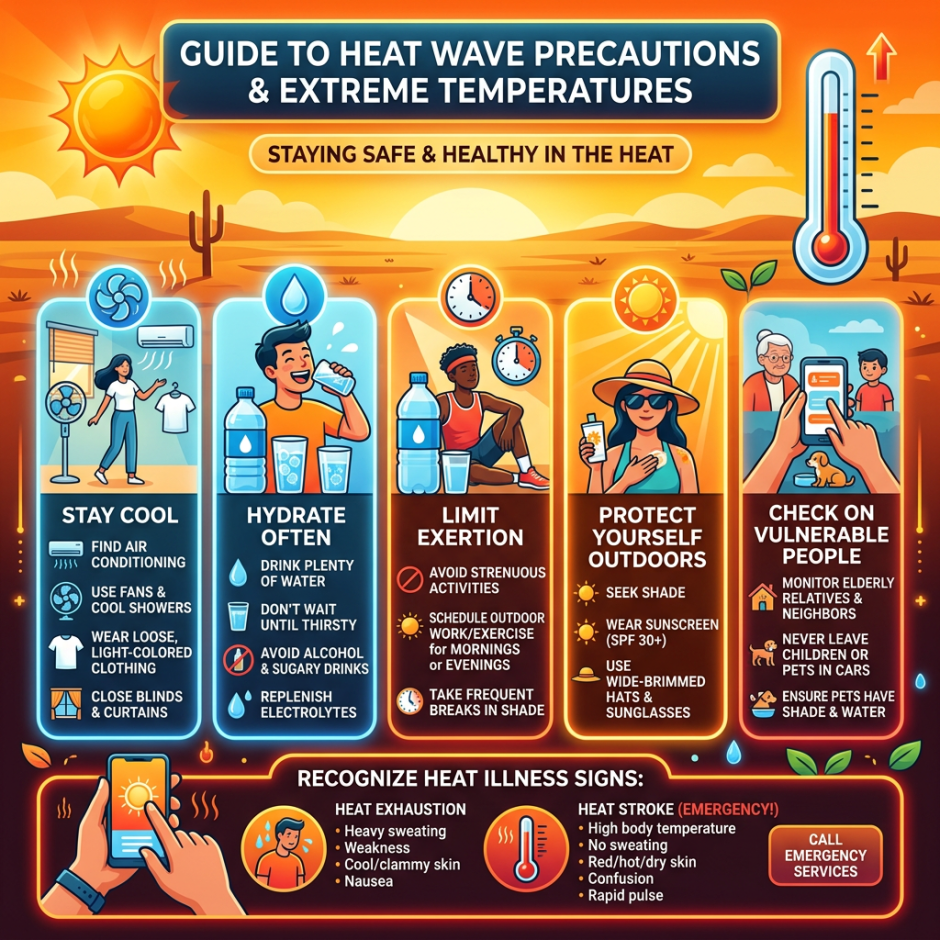
During an extreme heat wave, the goal is to stay cool, stay hydrated, and stay informed. Heat-related illnesses can develop quickly, especially in older adults, infants, pregnant people, outdoor workers, and those with chronic medical conditions.
Here are practical precautions for different situations:
Before You Step Out
- Check the local weather forecast and any heat advisories.
- Plan outdoor activities during the early morning or after sunset.
- Wear:
- Light-colored, loose-fitting, breathable clothing (cotton or moisture-wicking fabrics)
- A wide-brimmed hat
- UV-protective sunglasses
- Apply sunscreen (SPF 30 or higher). Sunburn makes it harder for your body to cool itself.
- Carry a reusable water bottle and sip water regularly—even if you don’t feel thirsty.
While Traveling or Outdoors
- Take frequent breaks in the shade or an air-conditioned place.
- Avoid strenuous activities during the hottest hours (typically 10 a.m. to 4 p.m.).
- Drink water often. If you’re sweating heavily for long periods, consider drinks that replace electrolytes, but avoid excessive sugary or alcoholic beverages.
- Never leave children, older adults, or pets in parked vehicles.
- If using public transportation, carry water, wear a hat, and wait in shaded areas whenever possible.
🏠 Staying Safe at Home (With Electricity & Cooling)
- Keep your home cool by:
- Using air conditioning if available.
- Closing blinds or curtains during the day.
- Using fans to circulate air (note that fans alone may not prevent heat illness during extreme temperatures).
- Limit the use of ovens and stoves during the hottest part of the day.
- Take cool showers or baths.
- Wear lightweight clothing indoors.
- Eat light meals with fruits and vegetables that contain plenty of water (such as watermelon, cucumber, oranges, and berries).
⚡ If You Don’t Have Air Conditioning or Lose Power
- Spend time in public air-conditioned places such as:
- Libraries
- Shopping malls
- Community cooling centers
- Community centers
- Keep windows and doors closed during the hottest part of the day if it’s hotter outside, and open them at night if temperatures drop.
- Stay on the lowest floor of your home if possible, as heat rises.
- Use cool, damp cloths on your neck, wrists, and forehead.
- Take cool showers or sponge baths.
- Avoid unnecessary physical activity until temperatures improve.
Hydration Tips
- Drink water consistently throughout the day.
- Eat water-rich foods like watermelon, cucumbers, tomatoes, oranges, and strawberries.
- Limit:
- Alcohol
- Excess caffeine if it causes dehydration
- Very sugary drinks
- People with heart disease, kidney disease, or fluid restrictions should follow their healthcare provider’s advice about fluid intake.
Check on Vulnerable People
- Check on older relatives, neighbors, or anyone living alone at least once or twice a day.
- Ensure babies and young children stay cool and hydrated.
- Make sure pets always have fresh water and shade. Walk dogs early in the morning or later in the evening to avoid hot pavement, which can burn their paws.
Know the Warning Signs
Heat exhaustion may include:
- Heavy sweating
- Weakness or fatigue
- Dizziness
- Nausea
- Headache
- Cool, pale, clammy skin
Move to a cooler place, loosen clothing, sip cool water, and apply cool compresses.
Heat stroke is a medical emergency. Call emergency services immediately if someone has:
- A body temperature of 104°F (40°C) or higher (if known)
- Confusion or altered mental state
- Fainting
- Seizures
- Hot, red skin (which may be dry or still sweaty)
While waiting for help, move the person to a cool place and cool them rapidly with cold water, wet towels, or ice packs placed on the neck, armpits, and groin.
Stay safe! Stay healthy!